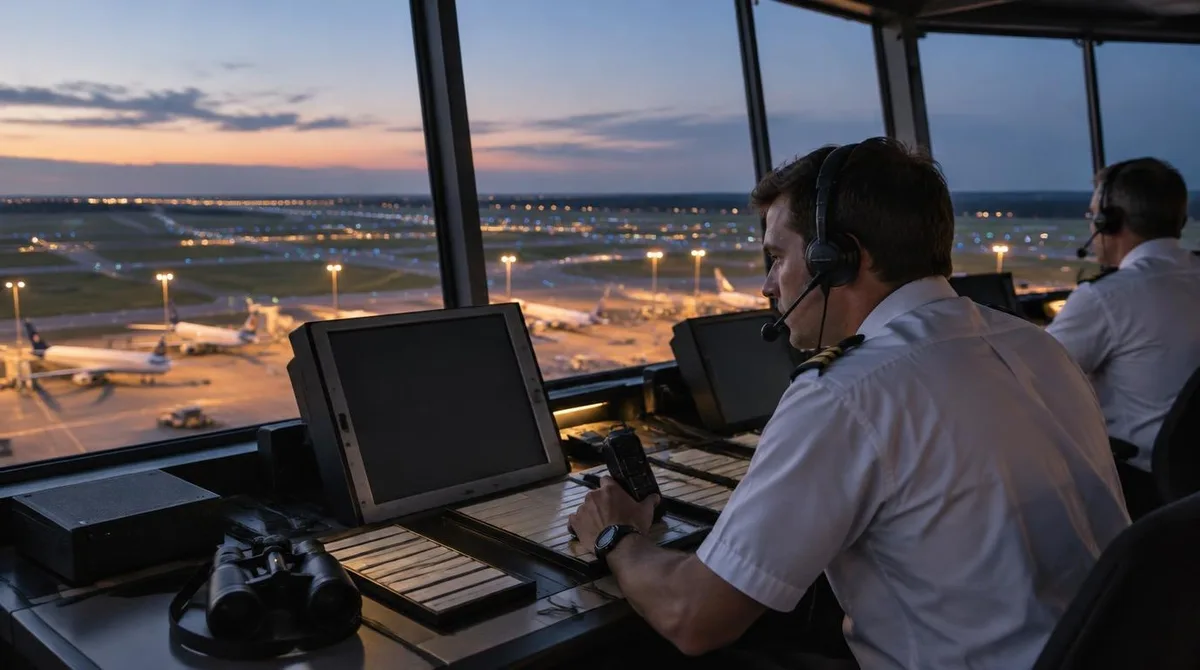
An air traffic controller coordinates air traffic in controlled airspace. Controllers work in area control centers or towers. They stay in direct contact with pilots, per the reference record. The stakes run high on every shift. The job is considered highly demanding and stressful, and the pipeline that produces new controllers is narrow: strict age limits, a single training academy, and a long certification road all thin the ranks. That is the shortage in one sentence, and it explains why coverage grows fragile when demand rises.
This guide explains the pipeline, the training bottleneck, and what thinning coverage means for safety. For related coverage, see FMS or Direct Commercial Sale: Which Path Moves Allied Arms Deals.
Why Is the Job Hard to Fill?
The work itself sets the bar. Controllers make continuous decisions under time pressure, per the reference record. Unfavorable schedules, high responsibility, and equipment reliability add to the load. The stress is part of the job. Not everyone can do the job, and not everyone who starts the training finishes it.
The rules tighten the funnel further. In the US, the Federal Aviation Administration requires trainees to begin academy training no later than their 31st birthday, per the record. Controllers face mandatory retirement at the end of the month they turn 56. The Secretary of Transportation can extend that to 61. The window opens late and closes on a fixed date. Late starters have no room.
Where Is the Training Bottleneck?
Training runs through few doors, per the reference record. New controllers train at the FAA academy first. Then they qualify at their assigned facilities through years of on-the-job work. Each facility certifies its own people. The academy start date is capped by the age rule. A hiring miss in one year cannot be fully repaired the next. The pipeline only moves so fast.
Practice time is part of the bottleneck too. The record notes that reduced daily practice hurts proficiency. It points to computer-based training and simulation as ways to keep skills current. Facilities also matter in another way. Every move between facilities resets part of the training clock. The system does not hand out shortcuts.
What Rules Bound the Work?
The FAA regulates controller hours tightly, per the reference record. Controllers may not work more than 10 straight hours in a shift, breaks included, per the record. They must have 9 hours of rest before the next shift. They usually work rotating schedules too.
Those rules protect safety, and they also cap output. A thin roster cannot buy back capacity with overtime the way other jobs can, because the hour rules are fixed. When staffing drops, the only lever left is to slow the traffic or thin the coverage.
What Does Thin Coverage Mean for Safety?
The safety margin lives in staffing. A full roster lets facilities run normal traffic with room to spare. Breaks, training, and emergencies all fit inside it. A thin roster stretches the same people across more positions. The hour rules exist because fatigue research says so.
Modernization helps at the edges. The record describes remote and virtual towers as one approach. These replace a physical tower with remote facilities. Simulation-based proficiency training is another. Neither changes the core fact. Neither changes the core fact: someone qualified must watch every sector, and the supply of qualified people is the constraint.
Conclusion: A Pipeline Problem, Not a Job Problem
The shortage is not a mystery. The job is demanding. The age rules narrow the entry window. The academy gates the flow. Certification takes years after hiring. Hour rules keep the roster safe but keep it from stretching, so thin staffing shows up as reduced coverage rather than longer shifts. As of 2026, every fix on the table, from simulation training to remote towers, works by making the same small pool of controllers go further. This connects to our earlier piece, How the Pentagon Budget Cycle Actually Works, Year by Year.